
Let’s start with the obvious. Women aren’t short on ambition, brains, or credentials. They’re showing up with MBAs, solid experience, and sometimes even higher starting salaries than men. Yet somewhere between “manager” and “VP,” the escalator to leadership turns into an obstacle course. Spoiler: it’s not because women forgot how to lead. It’s because the system isn’t built for them.
The good news? Systems can be redesigned. And if your company wants to attract and keep women leaders (which you do if you’re serious about business/financial performance), here’s how to stop treating leadership like an exclusive club and start recognizing it as the career outcome that it actually is.

here’s how to stop treating leadership like an exclusive club and start recognizing it as the career outcome that it actually is."
Why the Funnel Narrows So Fast
According to McKinsey’s 2024 Women in the Workplace study, women make up 48% of entry-level roles but only 29% of SVP/C-suite positions. Early parity doesn’t last.
Forté’s MBA Outcomes Survey shows why. Women begin on nearly equal footing post-MBA, but a few years later report earning 17% less than men. And smaller salaries mean smaller raises, bonuses, and long-term growth.
On top of that, our survey found women are:
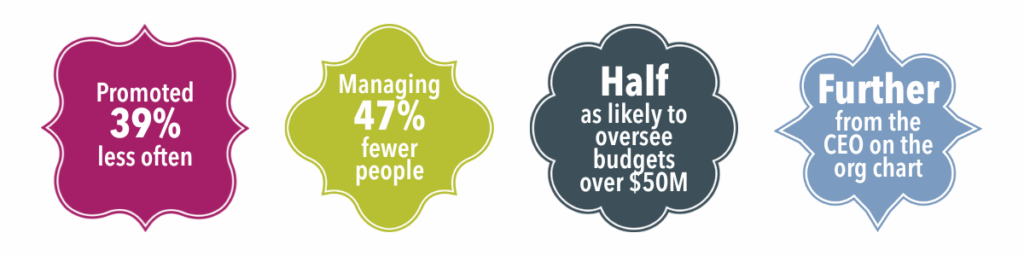
Translation: women aren’t short on talent. They’re short on opportunities to prove it.
What Women Say Is Blocking Them
The barriers are clear, and in some cases, they’re not unique to women:
- No clear career path. More than half of women in our survey said they don’t have a formal development plan. Here’s the kicker: even more men said the same thing. So it’s not just a women’s issue, but when the system is unclear, women - who already face fewer promotions and stretch opportunities - pay a steeper price.
- No sponsorship. Nearly half of women don’t have someone in the room saying “she should run that project.” More men do.
- Confidence gaps. Forty percent of women cited low confidence as a barrier compared to 29 percent of men. This isn’t just individual doubt; it’s the product of undervaluation and too few visible role models, which reinforce hesitation about stepping forward.
These barriers don’t just stack, they multiply.
The Fix Isn’t Rocket Science
Here’s where companies can move the needle:
- Turn ERGs Into Leadership Launchpads
ERGs aren’t just social clubs. Done right, they accelerate careers: clarify advancement paths, connect talent to sponsors, and showcase role models. Bonus: they also strengthen recruiting by signaling culture, not just policies. - Equip Managers to Actually Lead People
Managers define culture. Train them to spot potential, give quality feedback that builds confidence, and reward those who consistently develop talent. - Stop Hiding the Career Ladder
Ambiguity is not a strategy. Publish advancement criteria, apply them consistently, and talk openly about what it takes to move up. - Final Word: Transparency = Trust
Pay, promotions, and visibility aren’t perks. They’re the scoreboard. If you want to prove progress, you have to track who’s advancing, who’s leading, and who’s being recognized.
Four Action Items to Start Yesterday
-
1
Activate ERGs as engines for growth and recruitment
-
2
Train managers to lead inclusively and develop talent
-
3
Codify and communicate advancement pathways
-
4
Track and fix systemic gaps with data
Do this, and your organization won’t just keep women — it will finally empower them to lead in the ways they’re already capable.
Want More?
Download our Strategic Guide to Advancing High-Potential Women.
If your company or academic institution is a Forté member, you may be entitled to a free Professional Access Pass, which allows access to this area of our website. Check our lists of corporate and academic members to see if employees from your organization are eligible. If so, please contact pro@fortefoundation.org for instructions on how to claim your free Access Pass.