
This article incorporates insights from executive coach Kelly O’Brien on building confidence at work.
Some people seem naturally confident.
They speak up easily. They volunteer for stretch assignments. They don’t appear rattled by feedback.
It can look like confidence is something you either have or you don’t.
But confidence is not a personality trait. It’s a skill. And like any skill, it can be developed.
Early in your career, that distinction matters.
Why Confidence Feels Hard at the Beginning
When you are new in a role, everything can feel like a test. Meetings feel like you are being evaluated. Feedback feels very personal. And silence? That’s the worst. Silence feels like disapproval.
When you are still figuring out how things work, uncertainty can feel like evidence that you don’t belong. It rarely is.
Confidence does not come from knowing everything. It comes from understanding yourself and being willing to act before you feel completely ready.
What Confidence Actually Is
At its core, confidence begins with self-awareness.
- What are your strengths?
- What do you value?
- What kind of work energizes you?
- Where are you still developing?
When you understand your own patterns, you stop trying to be the loudest person in the room and start focusing on being prepared.
Confidence also grows through behavior. You don’t just sit around and wait to feel confident. You build confidence by doing small, slightly uncomfortable things repeatedly:
Speak once in a meeting. Volunteer for a manageable stretch project. Ask a clarifying question instead of staying silent.
Action creates evidence. Evidence builds belief.
Practical Ways to Build Confidence Early
1. Ask for Specific Feedback
Vague reassurance does not build confidence. Specific feedback does.
Instead of asking, “How am I doing?” try:
- “What is one thing I should continue doing?”
- “What is one thing that would strengthen my work?”
Specific input gives you direction. Direction reduces anxiety.
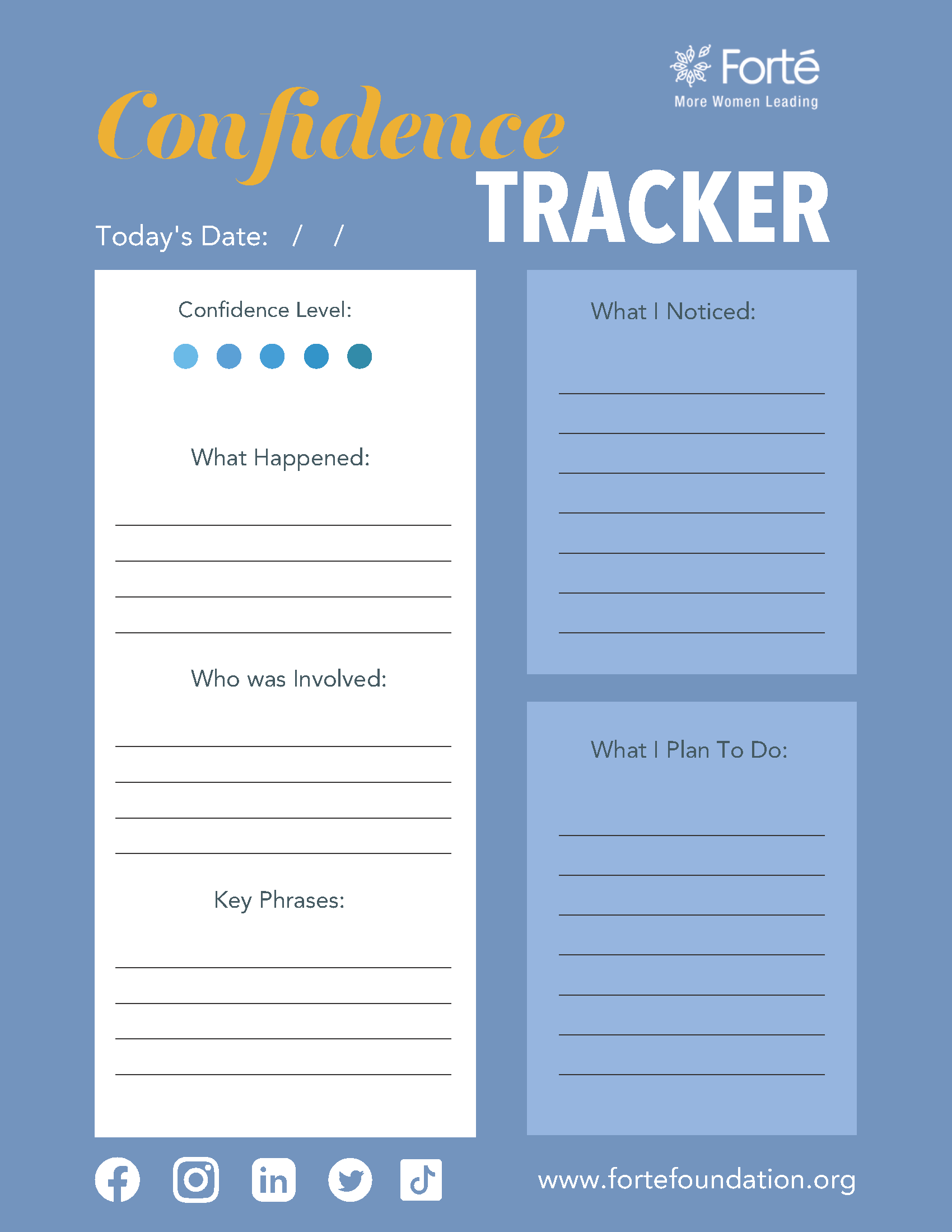
2. Track Your Wins and Triggers
Keep a simple confidence log.
After a meeting or project, jot down:
- What went well?
- Where did I hesitate?
- What triggered self-doubt?
Patterns will emerge. Confidence often erodes in predictable situations. Once you see the pattern, you can prepare for it.
3. Practice in Lower-Stakes Settings
If something feels intimidating, break it into steps.
- Practice your talking points with a peer.
- Contribute in a smaller meeting.
- Then speak in a larger forum.
Gradual exposure builds skill without overwhelming you.
4. Develop One Strength Into a Signature
Early-career professionals often focus only on fixing weaknesses.
Improvement matters. But confidence accelerates when you become known for something specific.
Maybe you are:
- Exceptionally organized
- Strong at synthesizing complex information
- Calm in fast-moving situations
- Thoughtful in one-on-one conversations
Lean into one strength and develop it intentionally. When others rely on you for something clear and consistent, confidence grows internally and externally.
5. Build a Support Network
Confidence is easier when you are not navigating alone.
Cultivate relationships with:
- Peers who understand your day-to-day reality
- Mentors who offer perspective
- Sponsors who advocate for you
A strong network provides perspective and optionality. When you know you have support and alternatives, risk feels less threatening.
Here is something worth remembering
The people you perceive as confident experience self-doubt too. They have simply learned to move forward anyway.
Confidence is not the absence of fear. It is the decision to act with preparation and self-awareness despite it.
Early in your career, you don’t need to be certain. You need to be intentional.
Confidence is built. And you can start building it today.
Download Forté’s Confidence Tracker to begin documenting your growth and strengthening your self-awareness at work.