
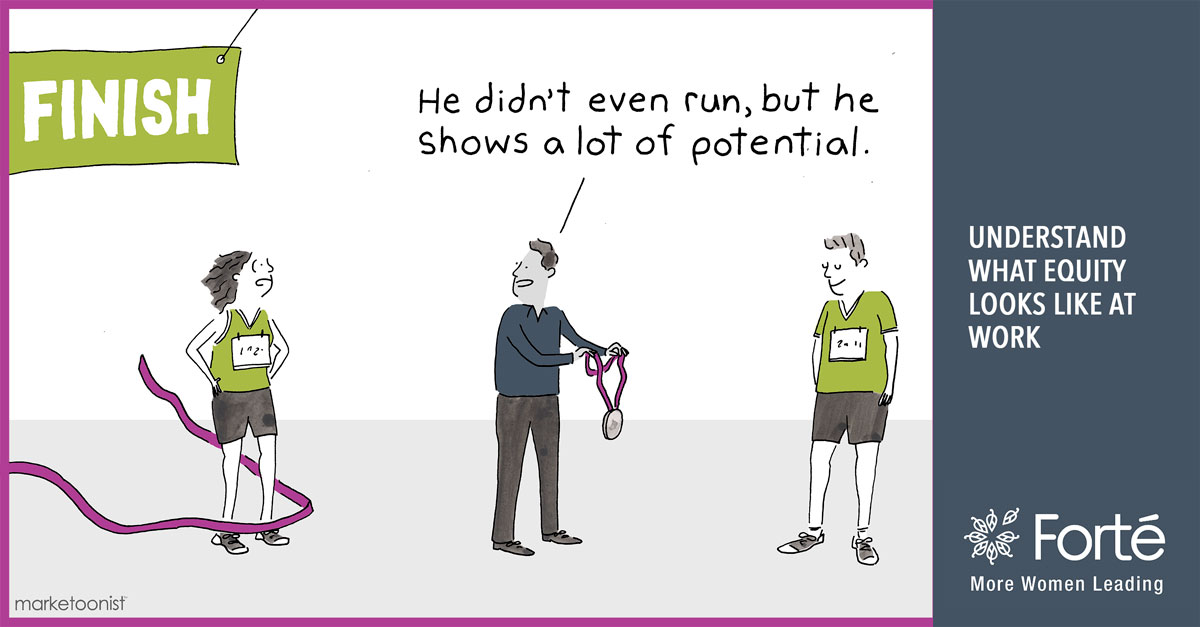
- Pay attention to the language you use in performance reviews and feedback. Unconscious biases and gender stereotypes influence the review process. A study of hundreds of performance reviews found dramatic differences in the reviews given to women and men. Women are also less likely to receive actionable feedback, so be sure to provide specific examples of what the women on your team can do to improve.
- Hold inclusive meetings. Take steps to make your meetings more fair and effective, such as sending materials in advance, communicating expectations around participation, and considering how power dynamics could affect engagement.
- Be mindful of how you give out stretch assignments. Hold yourself accountable for dividing up important projects in an impartial way, because this type of assignment is often closely tied to career advancement.
- Make sure women’s voices are heard. During meetings, if a woman is talked over or interrupted, direct attention back to her and ask her to finish her thought.
- Advocate for women. Even if you’re not in a position to mentor or sponsor a colleague yet, you can encourage the women in your life to express themselves, pursue leadership roles, and negotiate for what they want.
- Look for ways to be an advocate. Ask the women you work with about their experiences, and ask how you can support them.