
Getting Started as an Ally
A great first step is to educate yourself about the experiences of marginalized people. To become a gender equity ally, learn about women's experiences in the workplace. Read books and articles. Watch videos. If your company has a women’s ERG, ask if allies are welcome to participate. As a whole, women are vastly underrepresented in business leadership, and women who do rise into leadership roles often face numerous challenges — from microaggressions to overt sexism. The 2022 Women in the Workplace report from McKinsey and LeanIn.org found that women are switching jobs at higher rates than men because, in part, women want to work at companies that support their well-being and have more inclusive cultures. Individually, each woman's experiences at work will be different. In Forté’s Allies for Gender Equity program, we encourage allies to interview women in their lives about how their gender has affected their career journey. Listening to friends and family members talk about their experiences with gender often helps potential allies understand how they can make a difference.Allies Are a Force for Positive Change
People of all career levels and all gender identities can take action for gender equity. Here are some tips for getting started.- Start by looking inward. Reflect on your professional interactions with women — past and present. As you learn more about gender equity, are there things you could do differently to be more supportive and inclusive?
- Listen to women. Instead of trying to guess what your women colleagues would find helpful, ask them. Do they need a mentor or a sponsor? Are they hoping to take on a stretch project? Keep in mind that no two women are the same.
- Have conversations about gender equity. Sometimes, talking about gender can feel uncomfortable, but the more people know about these issues, the more prepared they will be to address inequities. Use our gender equity conversation starters to spark discussion.
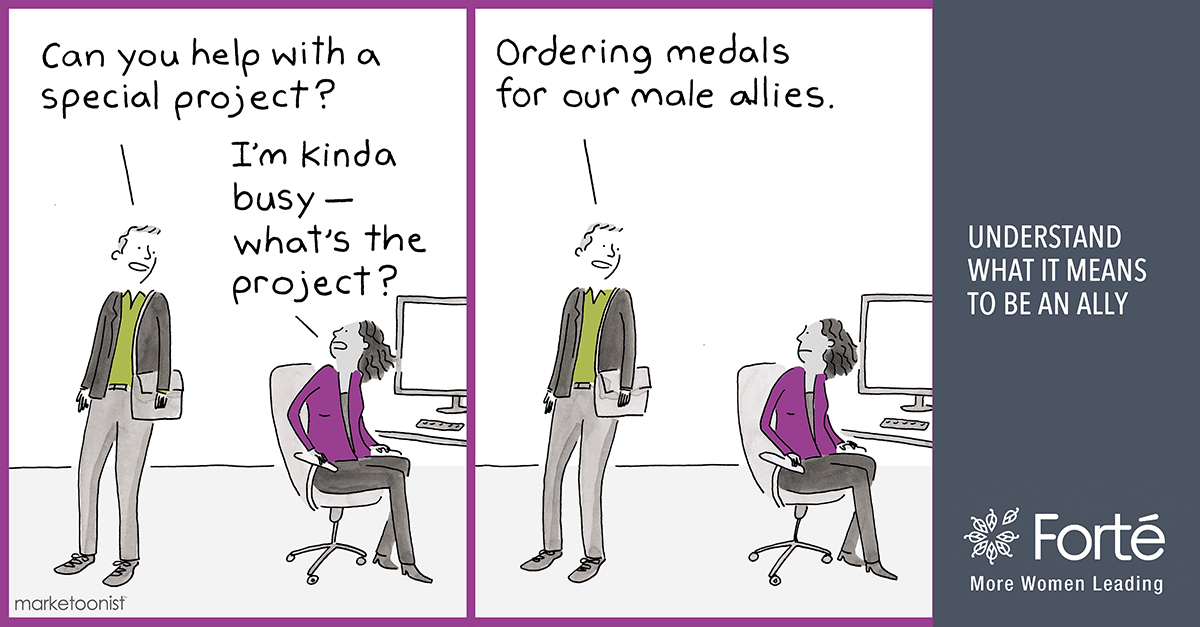
- Take small actions. Instead of trying to demonstrate your allyship by making a grand gesture, keep an eye out for inequities in your work environment. Notice team dynamics and look for ways to amplify women’s voices. For example, if you notice that a woman is being talked over in a meeting, consider subtly redirecting the discussion back to her so that she can finish what she was saying — and get credit for it
- Allyship takes practice. Allyship isn’t something you learn once. Like yoga or golf, it takes ongoing effort to develop your skills. You'll get better at it over time, but there’s no such thing as a perfect ally. Nobody is going to give you a medal!
- Allies make mistakes. Allyship is complex, and every situation is different, so even experienced allies make mistakes from time to time. If you make a misstep, or if your efforts don't land as you'd hoped, don’t give up on allyship. Apologize, ask how you can remedy the situation, and continue to be the best ally you can be.