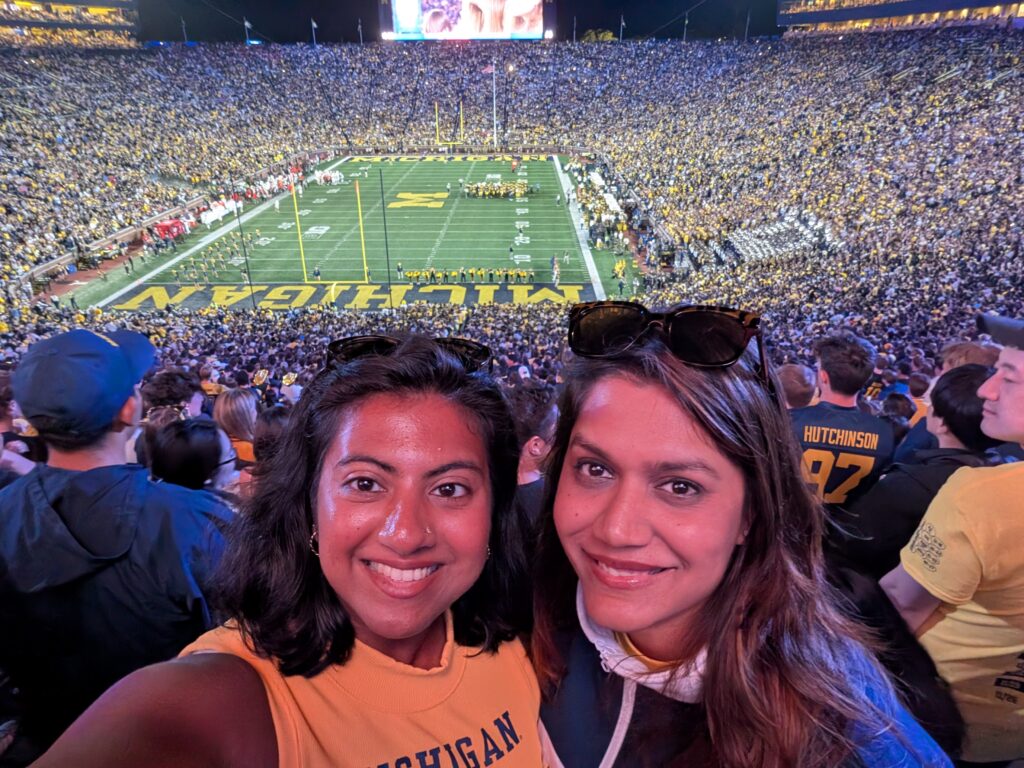

This blog is sponsored by University of Michigan (Ross School of Business)
Three years before I applied to business school, I was at a whiteboard at PwC, running an innovation workshop for a group of tax strategy partners. Their practice was growing fast and the work behind it was manual and impossible to scale. My job was to help them find the white space.
What I remember most was the feeling of the search. Pulling apart an industry, listening for where pain points were loudest, and asking what nobody had built yet. It was my first real exposure to entrepreneurship, and it rewired how I saw my own life. If I could do this for a client, what problem was I walking around with every day that I could solve the same way?
I didn't have to look far. I'd spent years trying to get a diagnosis for my chronic health condition, being bounced between specialists and handed medication that managed symptoms without touching the cause. I eventually decided to get certified as a women's health educator because I wanted to understand my own body better than the system seemed able to.
Somewhere along the way, that personal frustration became a market question – why are women so routinely under-diagnosed, and what would it take to change that?
Why an MBA, and Why the United States
I didn't want an MBA for the credential. I wanted it as an accelerator for two things: building and investing. I had an idea for a women's health venture and no structured way to test it alongside a demanding job.
I also wanted to sit on the other side of the table and learn how capital actually gets deployed into early-stage healthcare by doing diligence on real companies with real money at stake. And I'd built my career in Canada, but the founders I admired kept moving south to raise. I wanted to be where the capital was.
Why Ross
I evaluated programs against one question. Which program would let me invest and build in healthcare simultaneously?
Ross was the clearest answer. The Zell Lurie Institute runs the Pinkert Healthcare Accelerator and the Eugene Applebaum Dare to Dream Program — funding and structure for my own idea from my first year. The Social Venture Fund there also meant I could source early-stage healthcare startups, run diligence, and help decide whether our fund should write a check.
Then, the Forté Fellowship arrived with my admission and made the decision financially obvious as well as strategically obvious.
But what sealed it for me was the people. Before I was admitted, I cold-emailed current Ross students to learn about the program, and several of them ended up helping me prepare for my admissions interview. That told me more about the culture than any brochure could.
What Actually Happened
I went through both the Dare to Dream Program and Pinkert Accelerator with my venture, Nava, interviewing physicians and researchers across the Michigan network and stress-testing the idea properly for the first time.
On the investing side I pitched a remote diagnostics startup to Social Venture Fund members. Fund members were convinced to offer a check in our last funding cycle. And through Zell Lurie, a program director connected me with a U-M medical student building a pediatric device company. I helped him build his business plan and coached his pitch, and we won the Southwest Pediatric Device Consortium prize at the 2026 Rice Business Plan Competition.
Building Leadership and Community Now
The role I'm most excited about this year is leading a Michigan Ross FACT Group — a Functional Accountability Career Team. Each leader takes five or six first-year MBAs through recruiting, including resumes, networking, and interview prep.
I signed up because of how my FACT group leader and Ross’s consulting staff coach carried me through recruiting last year, with key lessons I'm still using. This pay-it-forward culture is integrated into our community and is one of my favorite parts of studying here.
I've also been deliberate about not spending my second year inside the MBA bubble. I've enrolled in Integrated Product Development, a design engineering course where I've been paired with an industrial engineer and a design student to build a digital product around the attention economy. Sitting with people who solve problems in a different language from mine are the most insightful hours of my week.
If You're Still Deciding
You don't need a fully formed plan to apply. You need a problem you can't stop thinking about, and enough support to let evidence change your mind about how to solve it. What Ross gave me was a compressed set of chances to experiment quickly, with support.
Author Bio: Sneha Dasgupta is an MBA ’27 candidate at the Ross School of Business, a Forté Fellow, and a Zell Lurie Institute Scholar focused on entrepreneurship and venture capital. She spent six years at PwC Canada, working across cybersecurity strategy and corporate innovation, and is a certified women’s health educator. Most recently, she completed an internship with Kearney’s Private Equity team.
Connect with her through her student ambassador profile or on LinkedIn.