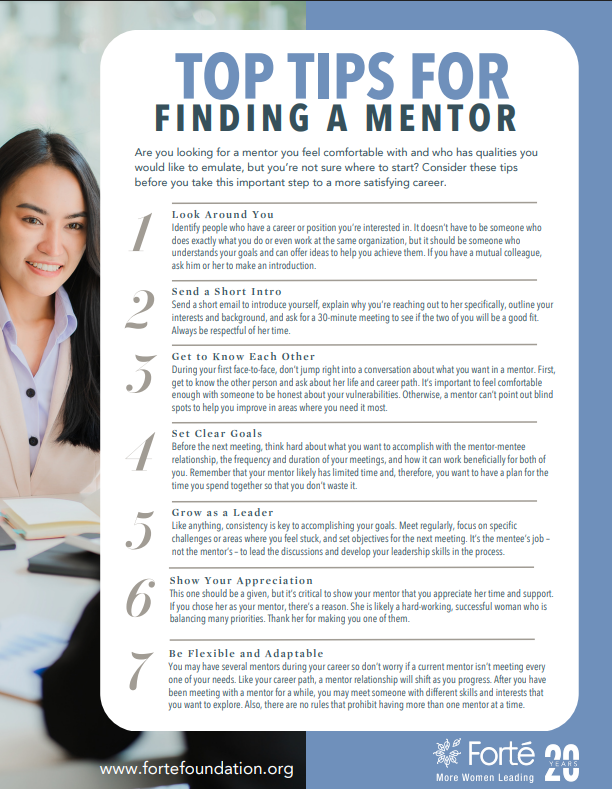

This article incorporates insights from Forté research and community data on the impact of mentorship in the workplace.
Working hard is important.
But early in your career, working hard without guidance is inefficient.
Many professionals assume that if they perform well, opportunities will follow. Sometimes they do. Sometimes they don’t.
And often, it has nothing to do with your talent. It’s about visibility, context, and advocacy.
That’s where mentorship comes in.
Mentorship is not a “nice to have.” It’s career infrastructure.
Why Mentorship Matters Early
When you’re new to a company or industry, you don’t just need skill. You need a translator:
- What actually gets noticed here?
- How are promotion decisions made?
- What mistakes are recoverable?
- What values matter most?
A mentor helps you see the environment more clearly.
Research consistently shows that professionals with mentors are more likely to be promoted and report higher job satisfaction. Yet far fewer people have one than you’d expect.
Not because they lack ambition. Because they don’t know who to ask or how to begin.
What Mentorship Is (and Isn’t)
Mentorship is not:
- Someone doing your job for you
- A guaranteed fast track
- A single coffee chat
Mentorship is:
- Ongoing perspective
- Pattern recognition
- Honest feedback
- Strategic guidance
A good mentor helps you see what you can’t yet see on your own.
How to Find a Mentor (Without Making It Awkward)
You do not need to send a dramatic message asking someone to “be your mentor.”
Start smaller.
- Identify someone whose career path or leadership style you respect.
- Ask for a focused conversation.
- Come prepared with thoughtful questions.
For example:
- “What do you wish you had understood earlier in your career?”
- “What skills matter most for advancement here?”
- “Where do you see people stall out?”
If the conversation is valuable, follow up. Mentorship often develops organically through consistency, not formal programs or titles.
How to Be a Strong Mentee
Mentorship is a two-way investment.
- Show up prepared for a meeting with your mentor.
- Follow through on your mentor's advice.
- Update your mentor on your progress.
- Respect your mentor's time.
Take the advice seriously. Show progress. That’s how trust builds.
And even early in your career, you likely have insight someone else can benefit from.
Teaching clarifies your own thinking. It strengthens confidence. It builds leadership muscle.
Mentorship is not just about receiving guidance. It is about participating in a professional ecosystem where knowledge moves forward.
Here’s the part many people miss
Advice builds insight.
Advocacy builds opportunity.
Over time, mentorship can evolve into sponsorship, where someone speaks your name in rooms you are not in.
But that evolution starts with trust. And trust starts with one thoughtful conversation.
If you don’t currently have a mentor, start small. One thoughtful conversation this month.
Your career will move faster when you are not navigating it alone.
Download Forté’s Top Tips for Finding a Mentor guide to learn how to start the right conversations and build relationships that last.