

The first thing you’ll notice about Hispanic Heritage Month is that, unlike most “months,” it doesn’t start on the 1st. It begins on September 15th, a time when five Latin American countries celebrate independence, with Mexico and Chile right after. In other words, it launches in the middle of a stretch already full of national celebrations. Honestly, who wouldn’t want a month that kicks off with a built-in party?
In that same spirit of celebration, we spoke with two Latina leaders who earned their MBAs more than a decade apart: Angelica Alam (University of Virginia Darden School of Business, Class of 2014) and Elsa Morales (University of Washington Foster School of Business, Class of 2025). Their stories show both the progress made and the work that still lies ahead.
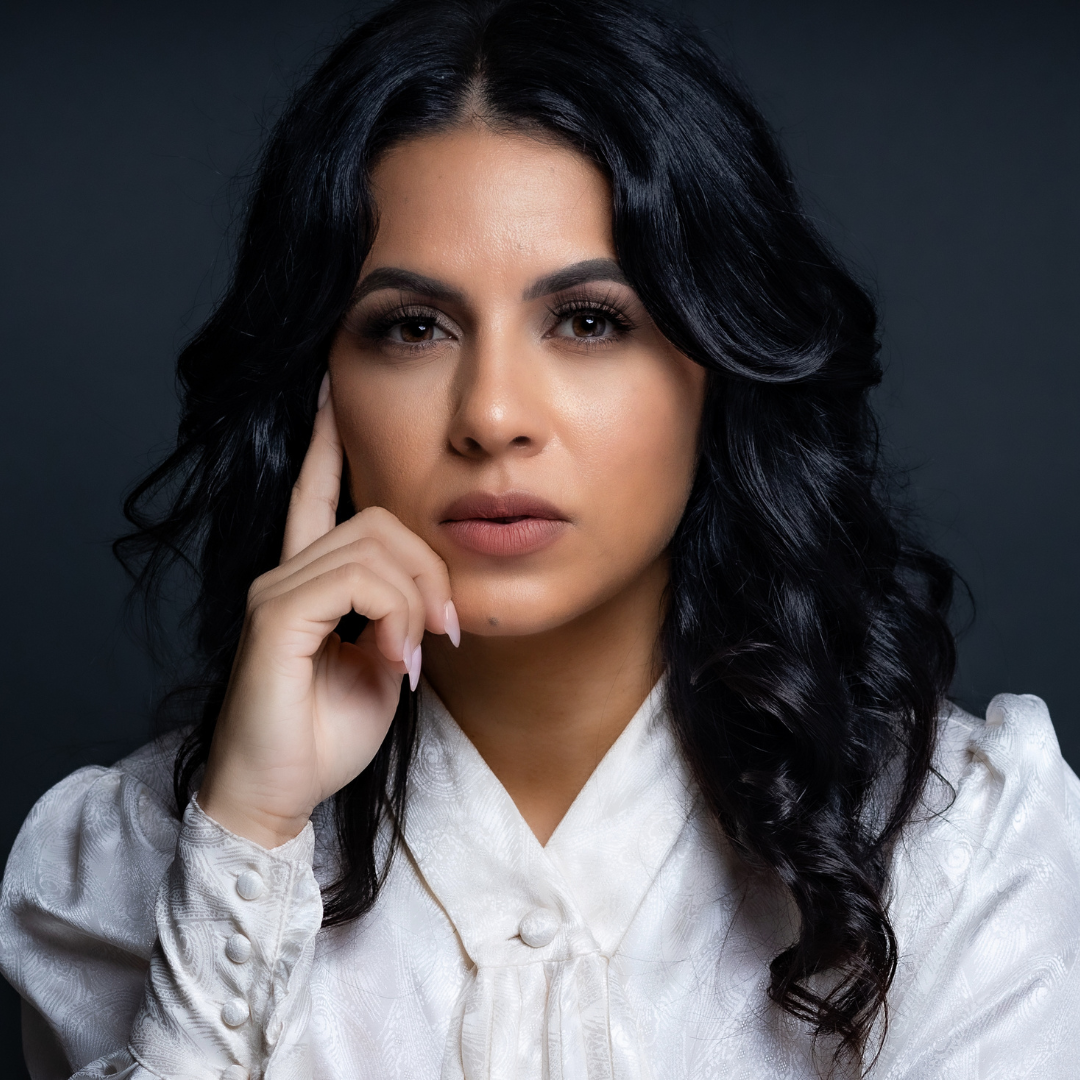
Angelica’s Story: Changing the 2 Percent
“When I enrolled at Darden, less than 2 percent of MBAs were Latinas,” Angelica recalls. “I felt a responsibility to be part of changing that narrative.”
Angelica started her career in the fast-paced world of media and entertainment at MTV Networks, working in strategy and business development. With encouragement from a mentor, she took the leap into business school. It wasn’t easy, but it gave her the clarity and confidence to pursue her true calling in financial services. Today, she leads product solutions at Wells Fargo.
One of her proudest accomplishments is founding The PowHer Circle, a network for women to support, advocate, and aim higher together. “There is no greater joy for me than seeing women step fully into their power,” she says. Many alumnae have gone on to extraordinary things, a reminder that leadership is also about lifting others as you rise.
Her advice to women considering leadership or an MBA is simple but powerful:

You matter, your voice matters, and your perspective matters. You belong in every room you aspire to be in. Your Latinidad is not something to downplay, it’s your superpower."

Elsa’s Story: From Therapy to Consulting
“There are two sides of me: the clinical and the corporate,” says Elsa. After nearly a decade in psychotherapy and counseling, she realized it was the right moment to lean into her corporate side. “I wanted to expand my perspective, work with teams, and create impact at scale.”
At the University of Washington’s Foster School of Business, Elsa found the community and mentorship she was looking for. She served as a Forté Ambassador, co-president of the Latinx MBA club, and MBAA Wellness President, and she was honored with the Outstanding Student Award at graduation. Today she is an Associate at Kearney, where she is building a career in consulting.
Her advice to others is to start with the end in mind.
Envision the future you want after the MBA, then work backward to choose the program that will best prepare you. Above all, be proud of who you are and recognize the strength that comes from our community.”
Why Their Stories Matter Right Now
Angelica’s 2 percent looks very different in 2025. Hispanic enrollment in MBA and other master’s business programs grew from about 5 percent in 2011 to 10 percent in 2021, and by 2025 reached 12.8 percent, according to the AACSB Business School Data Guide 2025. Those figures include both men and women, so they do not tell us exactly how many Latinas are represented. Still, given overall enrollment trends, I am hopeful that the number of Latinas earning MBAs has also doubled in that time.
But here’s the sobering counterweight. Latina Equal Pay Day falls on October 8th this year, right in the middle of Hispanic Heritage Month. That is how long Latinas must work into the next year to match what white men earned the year before.
That is why stories like Angelica’s and Elsa’s matter. Both show how an MBA can be a lever for mobility and leadership. Forté research shows women and minorities see a 51 percent salary increase after earning the degree, although gaps remain. An MBA may not close every gap, but it gives women the leverage to push forward.
Celebrate, Reflect, and Keep Moving Forward
Angelica and Elsa prove that an MBA can launch you in entirely new directions, whether from MTV to finance or from psychotherapy to consulting. More importantly, they show the power of representation and community.
So let’s celebrate. And let’s keep pushing. Because the future of business is brighter with more Latina MBAs leading the way.
¡Feliz Hispanic Heritage Month, y pa’lante
A Note on Terminology
I noticed that both Angelica and Elsa proudly identify as Latina, and it made me stop and think about what term I should use in this piece. Should I be saying Latina, Hispanic, or something else?
Here is what I found. In U.S. education and workforce data, the term most often used is Hispanic. Surveys show that while terms like Latinx and Latine are sometimes used in academic or activist circles, most people of Latin American heritage in the U.S. still prefer Hispanic, Latino, or Latina.
So here is how I’ve approached it. I use Hispanic when referencing official data, since that is how the statistics are collected. And I use Latina when highlighting the voices and stories of women like Angelica and Elsa, who embrace that identity.