

Sometimes, at work and in life, we say yes to things that we don't want to do or that don’t align with our goals.
We do this for all sorts of reasons: We want people to like us. We want to be team players. We want to avoid a confrontation. We’re afraid if we say no this time, they won’t ask us again. Sometimes we say “Yes,” because we’re busy, and it feels quicker and easier than trying to explain the “No.” But if you say “Yes” to something and then let it wither away at the bottom of your to-do list, you’re not doing yourself — or anyone else — any favors.
I don't know about you, but I don't say no as often as I'd like. Saying no is hard. It can feel uncomfortable and even scary.
Why Saying No Matters
The next time you’re about to say yes to something when you really want to say no, take a moment before you respond. Remember:
- Saying no is a way to advocate for yourself and set healthy boundaries. Think of it as creating psychological safety for yourself.
- Saying no shows others that you know what your priorities are. Setting boundaries and being able to prioritize are characteristics that demonstrate your ability to lead.
- Saying no to something that's wrong for you can make room in your life for new opportunities.
- We all have a limited amount of time and resources. A straightforward “No” to something that’s not a priority for you provides others with clarity. It allows them to look elsewhere for help and keep moving their project forward.
In a recent Leadership Coach session, we discussed how to say no in ways that leave others feeling good about the exchange and confident about you as a leader.
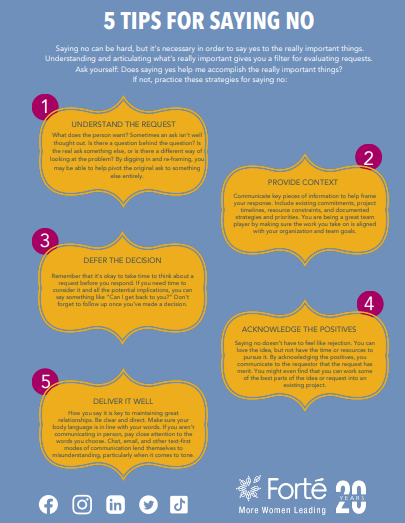
Strategies for Saying No
Ready to practice saying no from a place of strength? We compiled some practical tips to help you build this new habit.
TAKE CHARGE OF YOUR FUTURE
Research industries, search for your dream job, and explore Forté’s Career Skills & Coaching professional development resource center for on‑demand guidance, expert insights, and next steps.