
One of the lighter cultural trends of 2026 is our nostalgia for 2016.
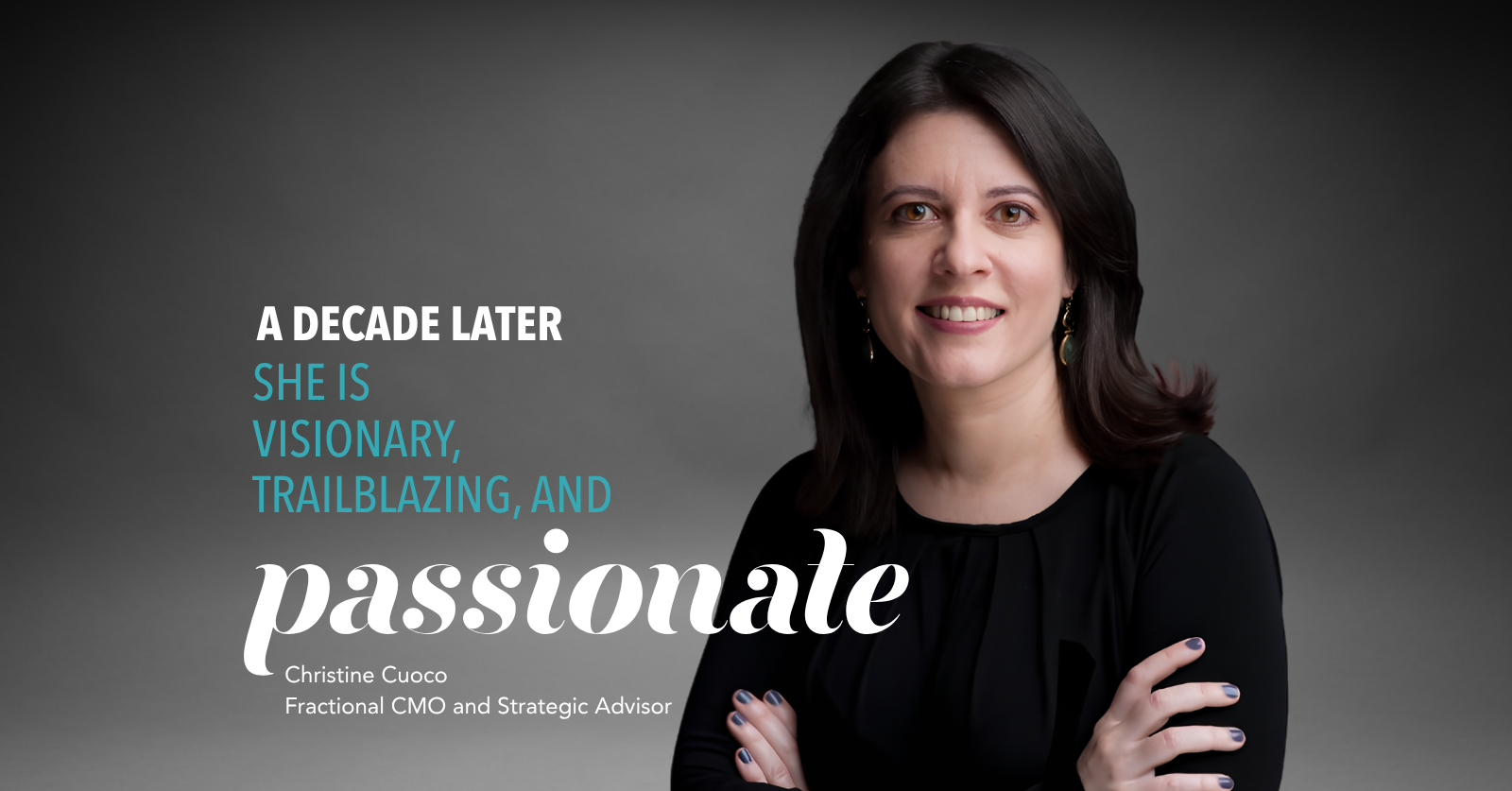
Maybe that's why people still occasionally reach out to Christine Cuoco about the Forté profile she did nearly a decade ago, back when she was leading global business marketing at Twitter. Christine brightened recalling the messages and unexpected connections that still surface from it. Ten years later, it's a reminder that what we put into the world often lasts longer than we expect.
Back then, Twitter felt like the future.
The company was growing rapidly. Innovation was accelerating. "Disruption" was still mostly said with admiration rather than exhaustion. And Christine loved the pace.
More than that, she loved what the pace represented.
Compared to Wall Street, where she started her career, tech felt full of possibility. The growth was faster. The responsibility came earlier. The opportunity to learn and contribute seemed almost unlimited.
At the time, she joked, "Be careful what you wish for."
Ten years later, she still loves innovation and learning. But she's become more intentional about what kinds of opportunities are worth pursuing.

The companies I'm most interested in today understand what AI can't replicate. Creativity. Human judgment. Emotional resonance.”
"The pace of tech today feels frenetic in a way that's different from anything I've experienced before," she said. "There's so much output, so much motion, but not always clear direction underneath it."
Artificial intelligence sits at the center of that conversation. Yet Christine is far from pessimistic about AI. In fact, she believes some of its most powerful applications can make work more human, not less.
"The companies I'm most interested in today understand what AI can't replicate," she said. "Creativity. Human judgment. Emotional resonance."
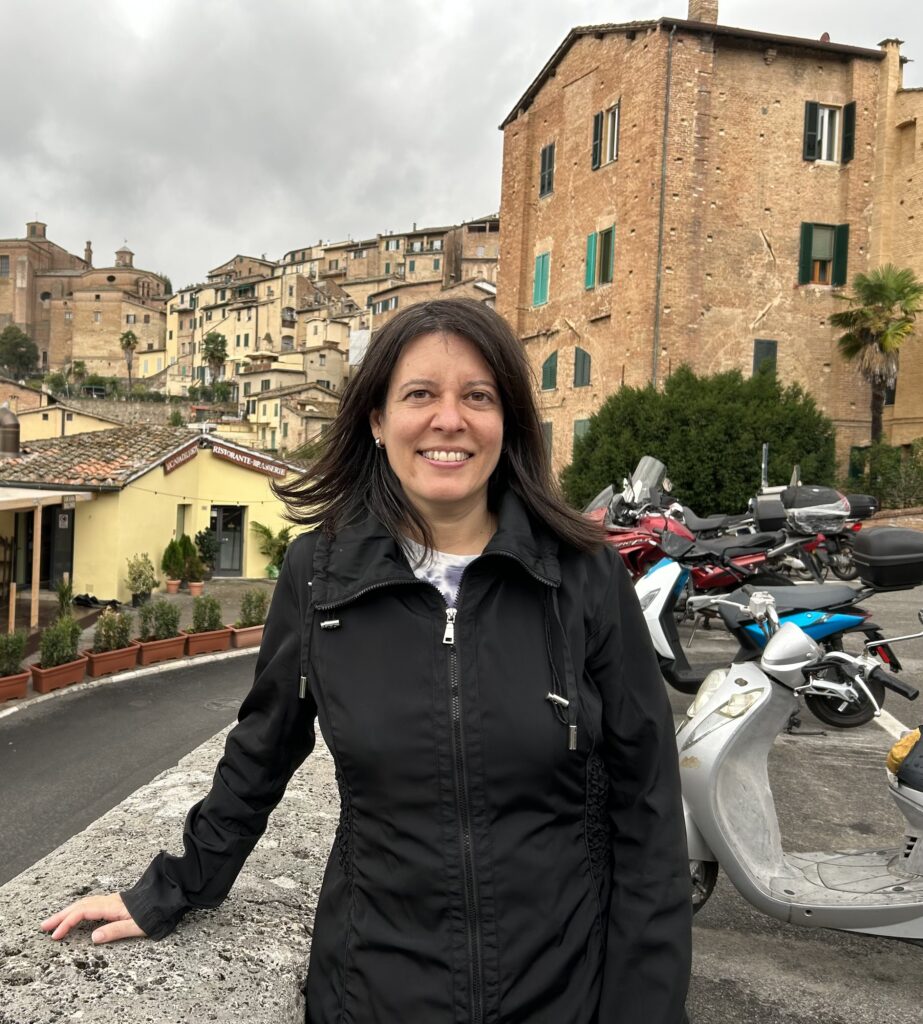
That focus on humanity has led her to an unexpected place: Italy.
Christine first fell in love with the country when she was eleven years old. She met family, learned Italian, returned whenever she could, and has stayed connected to the culture for decades. Now, through advisory work with startup communities across Italy, that lifelong interest is becoming part of her professional life as well.
"Italians understand how to build things that endure without losing their humanity," she said. "There's a respect for beauty and life there that feels increasingly important right now."
That perspective now shapes her work as well.
These days, Christine spends much of her time advising founders and growing companies as a fractional CMO and strategic advisor. Over time, that work has reinforced her belief that success is rarely driven by talent or strategy alone. It depends on the people, relationships, leadership, and organizational conditions surrounding the work.
Earlier in her career, Christine viewed a new opportunity as a package of factors to be weighed together: the role, the challenge, the learning potential, the leadership team, and the company itself.
Today, experience has shifted the balance.
She pays closer attention to the people and conditions surrounding the work.
The leadership team. The conditions that allow good work to succeed. The organization's ability to prioritize and focus.
"The role doesn't matter if those things aren't present," she explained.
Experience taught her that outcomes inside organizations are not driven by talent alone. Leadership changes. Reorganizations. Internal politics. Shifting priorities. Sometimes the environment surrounding the work matters just as much as the work itself.
That insight now shapes how she advises others. Today, one of the first questions she asks founders is: What role does marketing play in this organization?
The answer reveals much more than marketing. It reveals how the company thinks. It reveals how decisions get made, what the leadership team values, and whether the organization has the focus and alignment needed to execute. It tells her far more about a company's future than a job description ever could.
It's a different orientation than the one she brought to the Forté interview in 2016, when Christine talked about finding the right combination of "passion and people." Looking back, she sees that idea differently today. The words haven't changed. But what she means by them has.
Sometimes the environment surrounding the work matters just as much as the work itself.”
The shift became especially personal after the sudden death of her mother four years ago. A middle school art teacher, her mother spent her career helping students see potential in themselves. Years later, former students were still writing letters describing her impact.
"That really changed how I think about impact," Christine said.
Today, she measures opportunities differently. Not simply by growth potential, but by energy, meaning, and whether the work creates something genuinely useful for other people.
The careers matter. So do the promotions, pivots, and accomplishments. But sometimes time reveals something deeper than progress. It reveals the threads that were there all along.
For Christine, one began in Italy at age eleven. Another began with a career built on curiosity, openness, and a willingness to follow opportunities that didn't fit a plan.
Looking back, she realizes she has always been searching for the same things: A chance to learn. A chance to contribute. A chance to make an impact.
The difference is that today she has a name for it.
"In 2016, I was probably talking about passion with a lowercase 'p," she laughed.
Today, it's PASSION. All caps.