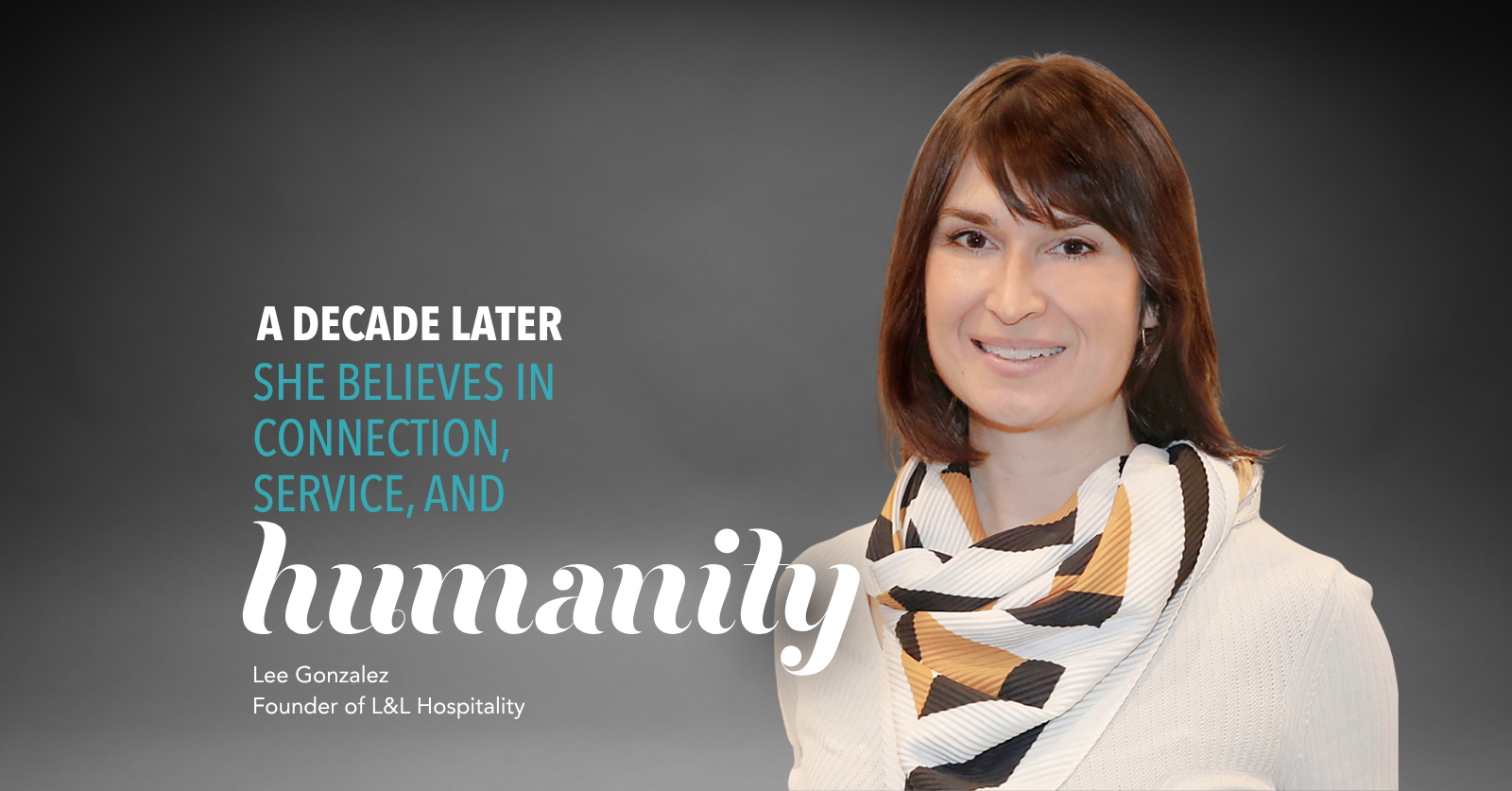
When Forté first featured Lee Gonzalez in 2016, she was doing what entrepreneurs often do: looking ahead.
She and her sister had already built and sold two hostels in Barcelona before opening their third, The Local, in Queens. Their next dream was already taking shape, a hotel-hostel hybrid in Portland, Oregon. Lee talked about it with excitement and confidence.
Now, ten years later, she remembers it this way: "I distinctly remember talking about the Portland project because I felt like by talking about it, I was willing it to happen."
And it did. After years of navigating debt financing, she and her sister broke ground in 2019 and opened Lolo Pass in 2021, on time and under budget, albeit three years later than she had optimistically projected.
Building Lolo Pass required exactly the kind of persistence Lee had talked about a decade earlier. Yet after everything it took to bring the project to life, she and her sister eventually had to let it go. It brought me back to something Lee had said in her original Forté interview: "Failure is not an option."
I asked whether she still believed that.
She didn't dismiss the idea. If anything, Lolo Pass reinforced just how powerful persistence can be. She and her sister still believe their willingness to keep pushing is what made the project a reality.
But experience has added another dimension.
Thinking about how she would approach a similar situation today, Lee reflected: "If I have to fight so hard for something to come to fruition, I'll think a bit harder about why this fight is such a struggle and whether my stubborn pursuit of the goal is actually serving me."
A decade hasn’t changed many of Lee's beliefs. It has changed the way she understands them.
Back in 2016, Lee described herself as "a little naïve and cocky" for leaving a secure Wall Street job to move to Barcelona and start a business in an industry she had never worked in. As the years have passed, she says that decision seems "crazier and crazier" to the people she tells it to. But still not to her.

If I have to fight so hard for something to come to fruition, I'll think a bit harder about why this fight is such a struggle and whether my stubborn pursuit of the goal is actually serving me.”
"I have always known that it would never be easier to make that move than at that moment in my life because I had so little to lose."
Just as experience didn't erase her belief in persistence, it didn't diminish her belief that leaving Wall Street was the right decision. It simply gave her a deeper understanding of why it was.
As I read through Lee's responses, I realized I was seeing the same pattern over and over. The confidence was familiar. The optimism was, too. What felt new was the layering. Every belief seemed to carry a little more context, a little more perspective, and a little more room for complexity than it had a decade earlier.
One of my favorite moments from Lee's responses wasn't a lesson or a piece of advice. It was an observation.
"I keep getting older," she wrote, "and my guests and my team, more or less, stay the same age."
It's a simple observation, but it says a lot about how Lee thinks today. Leadership isn't something you figure out once and then repeat. Every generation arrives with different expectations about work, communication, and what good leadership looks like.
Rather than expecting every new team to adapt to her, Lee has spent the last decade adapting alongside them.
The work keeps changing. So does the leader.
In 2016, Lee told us that what she loved most about hospitality was the people. If anything, she believes that even more strongly today. "As the world order changes and technology and AI rule the day," she wrote, "hospitality as an act of connection becomes even more important. Service can be achieved by technology, but hospitality will remain human."
Reading Lee's responses, I wasn't struck by how much she had changed. I was struck by how much more fully she understood the beliefs that had guided her all along.
Maybe that's what another decade gives all of us. Not a completely different story, but a richer understanding of the one we've already been living.
As the world order changes and technology and AI rule the day, hospitality as an act of connection becomes even more important. Service can be achieved by technology, but hospitality will remain human.”