
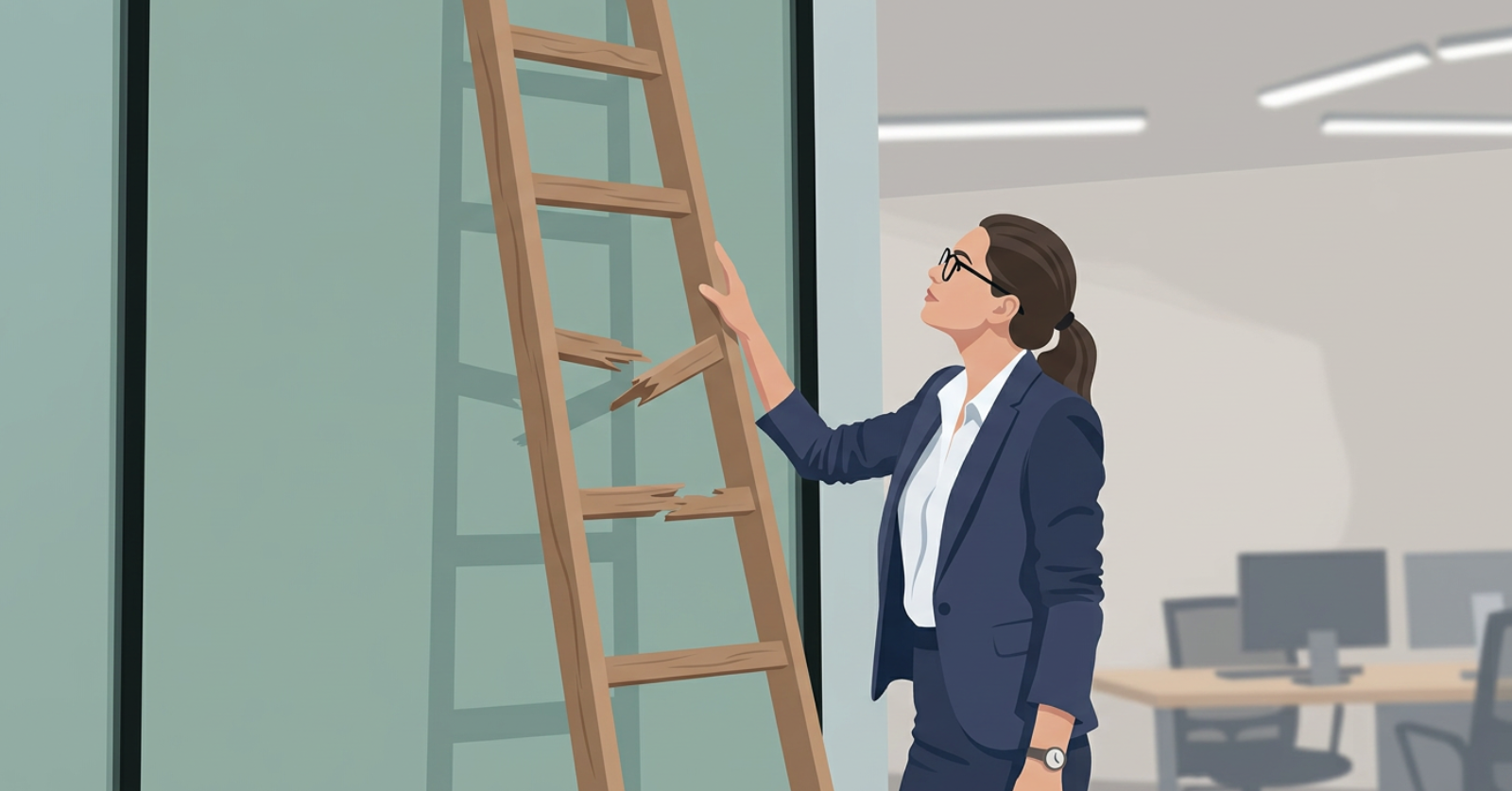
When people talk about women’s advancement, the conversation usually jumps straight to the C‑suite. But the real story starts much earlier, at the very first step up. For more than seven years, we’ve had a name for the place where women’s careers most often stall: the Broken Rung.
First introduced by McKinsey andLeanIn.org in 2019, the Broken Rung describes the moment when women are promoted from entry‑level to manager roles at significantly lower rates than men. It’s the earliest step on the leadership ladder. It's also the hardest one to take.
At Forté, we see this pattern across industries and across our partner network. In our Career Outcomes survey of MBA alumni, the numbers were striking: 85% of women — compared to just 49% of men — said they had either experienced the Broken Rung themselves or seen it derail someone else’s career. It’s a structural issue that slows your leadership trajectory long before senior roles are even in sight.
If you’re working toward your first promotion, you should know that the first promotion is rarely about whether you did your current job well. It’s about whether decision-makers can imagine you operating at the next level.
Why the First Promotion Feels Harder Than It Should
Across hundreds of write‑in responses from women, five themes show up again and again. These are organizational patterns; understanding them helps you recognize what’s happening and respond with intention.
1. Higher Standards for Advancement
Women often feel they need to check every box before they’re considered “ready,” while men are promoted on potential. This dynamic slows women’s advancement and shrinks the pool of future leaders.
What this means for you:
Focus on proof of impact. Keep receipts. Quantify your wins. Show how you’re already operating at the next level.
2. Gender Bias is both Subtle and Overt
Bias shows up in performance reviews, project assignments, and how leadership qualities are judged. Over time, these patterns influence who gets visibility and opportunity.
What this means for you:
Visibility is not bragging. Share your work. Present your ideas. Make your contributions easy to see.
3. Motherhood and Family Assumptions
Caregiving is still treated as a “career trade‑off” for women, even before they have children. These assumptions can quietly slow advancement.
What this means for you:
Don’t let others write your story. Be explicit about your goals and your readiness.
4. The Emotional Toll of Being Overlooked
When you’re passed over, your motivation and sense of belonging take a hit. Many women disengage, which makes it even harder to get promoted.
What this means for you:
Your ambition is an asset. Advocate for yourself without apology. You’re not “asking for too much.” You’re asking for what you’ve earned.
5. Lack of Mentorship and Sponsorship
Without someone pulling you into stretch assignments, you miss out on the experiences that lead to promotion. Sponsorship is one of the clearest differentiators between those who advance and those who stall.
What this means for you:
Seek mentors for guidance, and earn sponsors through consistent, visible, high‑quality work.
What You Can Do: Your FIRST Promotion Playbook
You can’t fix systemic issues alone, but you can navigate them with strategy. Here’s what you need to know about earning that first promotion.
1. Say Your Goals Out Loud
Closed mouths don’t get promoted. Tell your manager what you’re aiming for and ask what “promotion‑ready” looks like in concrete terms.
2. Track Your Wins Like It’s Your Job
Because it is. Keep a running list of accomplishments, metrics, and praise. You’ll need it when it’s time to make your case.
3. Build Visibility Intentionally
Volunteer for cross‑functional projects. Present your work. Share progress updates. Excellence in silence gets overlooked.
4. Act the Part Before You Get the Title
Promotions go to people already operating at the next level. Start taking on responsibilities that stretch you.
5. Build Your Support System Early
Mentors help you grow. Sponsors help you rise. Both matter, especially at this stage.
What Companies Must Do — and Where Forté Helps
If organizations want more women leaders, they must fix the first step. Forté partners often focus on:
- Auditing promotion data to uncover disparities at the entry‑to‑manager transition
- Redesigning promotion pathways with transparent, equitable criteria
- Training middle managers to lead inclusively
- Investing in mentorship and sponsorship early, not only at senior levels
- Supporting family balance with flexibility and normalized career pauses
The Broken Rung isn’t a women’s issue; it's a leadership issue. Until companies reinforce the ladder from the bottom, they will continue to lose talented women long before they reach senior roles.
Forté corporate members gain access to research, programming, early‑career talent pipelines, and proven strategies that strengthen this critical transition.
The Bottom Line for Early‑Career Women
You’re not imagining the barriers. But you are also not powerless. With clarity, visibility, sponsorship, and strategic self‑advocacy, you can climb past the Broken Rung and into the leadership roles you’re capable of.
Forté is here to make sure you don’t climb alone.